
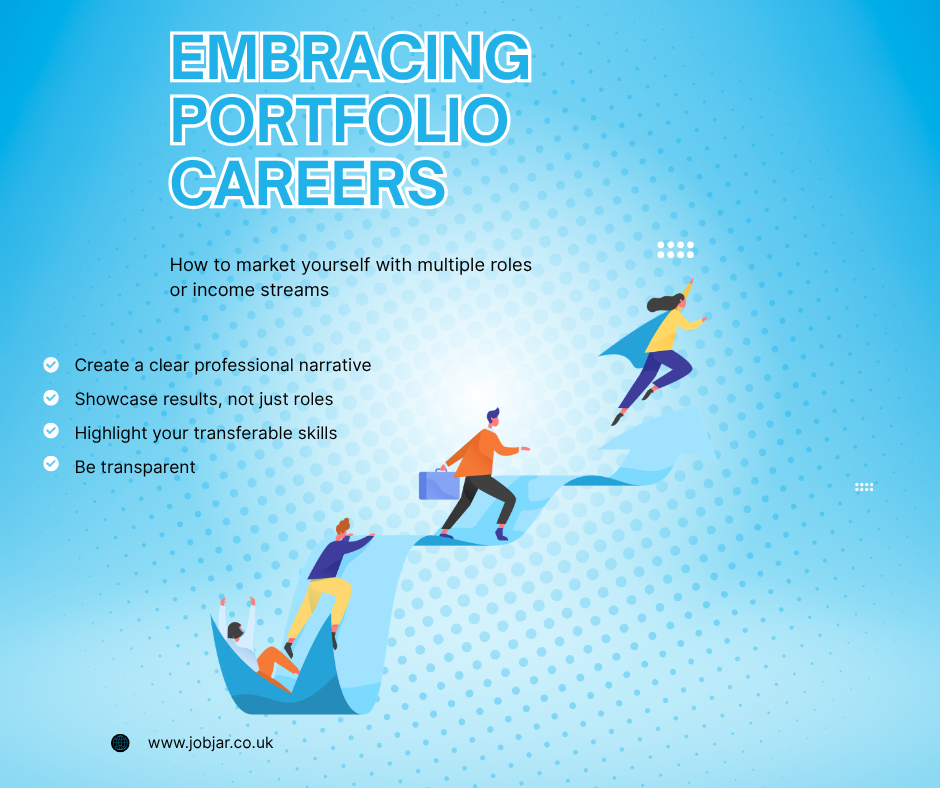

Embracing portfolio careers: how to market yourself with multiple roles or income streams.
The idea of a single lifelong career is becoming less common. More professionals are choosing to build portfolio careers, combining multiple roles, freelance projects, side businesses, or income streams instead of working in one traditional full-time position. From freelancing and consulting to running a small business alongside part-time employment, portfolio careers offer flexibility, variety, and the chance to develop skills across different industries.
But with multiple roles comes a unique challenge: how do you present your experience clearly and professionally to employers or clients? Here are some practical tips to help you confidently market a portfolio career.

Start with a clear professional narrative
If your career includes several roles, the key is creating a cohesive story about what you do and the value you provide. Instead of listing unrelated jobs, focus on the skills and expertise that connect them. For example, someone working as a marketing consultant, content creator, and social media manager might present themselves as:
“A digital marketing specialist helping businesses grow their online presence through strategy, content, and social media.”
This helps employers and clients quickly understand your core strengths.
Structure your CV strategically
A traditional chronological CV may not always work well for portfolio careers. Instead, consider structuring your CV by skills, projects, or areas of work. For example:
Professional Experience
Freelance Marketing Consultant (2023–Present)
Social Media Manager – Various Clients
Content Writer – Freelance Projects
Under each section, highlight key achievements, measurable results, and relevant skills. This approach keeps your CV organised while showing the breadth of your experience.
Showcase results, not just roles
When you hold multiple positions, employers may wonder about your impact. Focus on what you achieved, rather than simply listing responsibilities.
Examples include:
Increased website traffic by 40% through SEO content strategy
Managed social media campaigns reaching 50,000+ users
Delivered consulting projects for three startups
Concrete results help demonstrate the value you bring across different roles.

Use online platforms to your advantage
If you manage several professional activities, maintaining a strong online presence can make a big difference. Ensure that you keep all your professional profiles up to date, adding on any new skills or experience as soon as possible. You could also consider creating a digital portfolio of projects or case studies or highlighting testimonials from clients or collaborators. This will allow employers and potential clients to quickly see the range and quality of your work.
Be transparent about your availability
One concern employers sometimes have about portfolio careers is availability and commitment. Address this proactively by being clear about the types of roles you are looking for, use keywords and details, be upfront about your working schedule or capacity, and state whether you are open to freelance, contract, part-time, or permanent work. Clarity helps build trust and ensures expectations are aligned from the start.

Emphasise adaptability and diverse skills
One of the biggest strengths of a portfolio career is versatility. Managing multiple roles often requires strong time management and organisation skills. Employers and potential clients will also be looking for good problem solving and communication. Highlighting these abilities shows employers that your diverse experience is actually a major professional advantage.
Final thoughts
Portfolio careers are reshaping how people work, offering greater flexibility and opportunities to explore different professional interests. By presenting your experience clearly, focusing on results, and building a strong professional narrative, you can confidently market the full value of your multi-faceted career. For many professionals, a portfolio career is not just a temporary phase but it is a deliberate and rewarding way of working in today’s evolving job market.